Earth Block

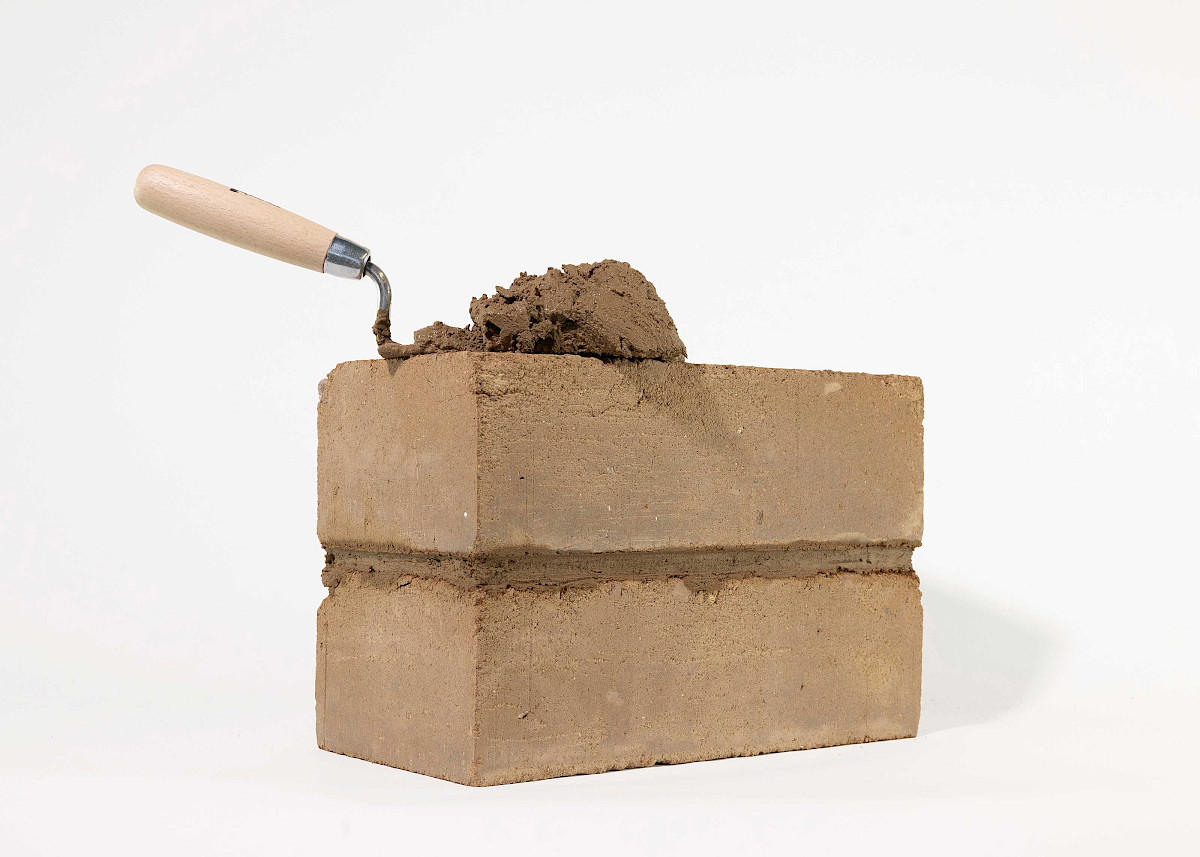
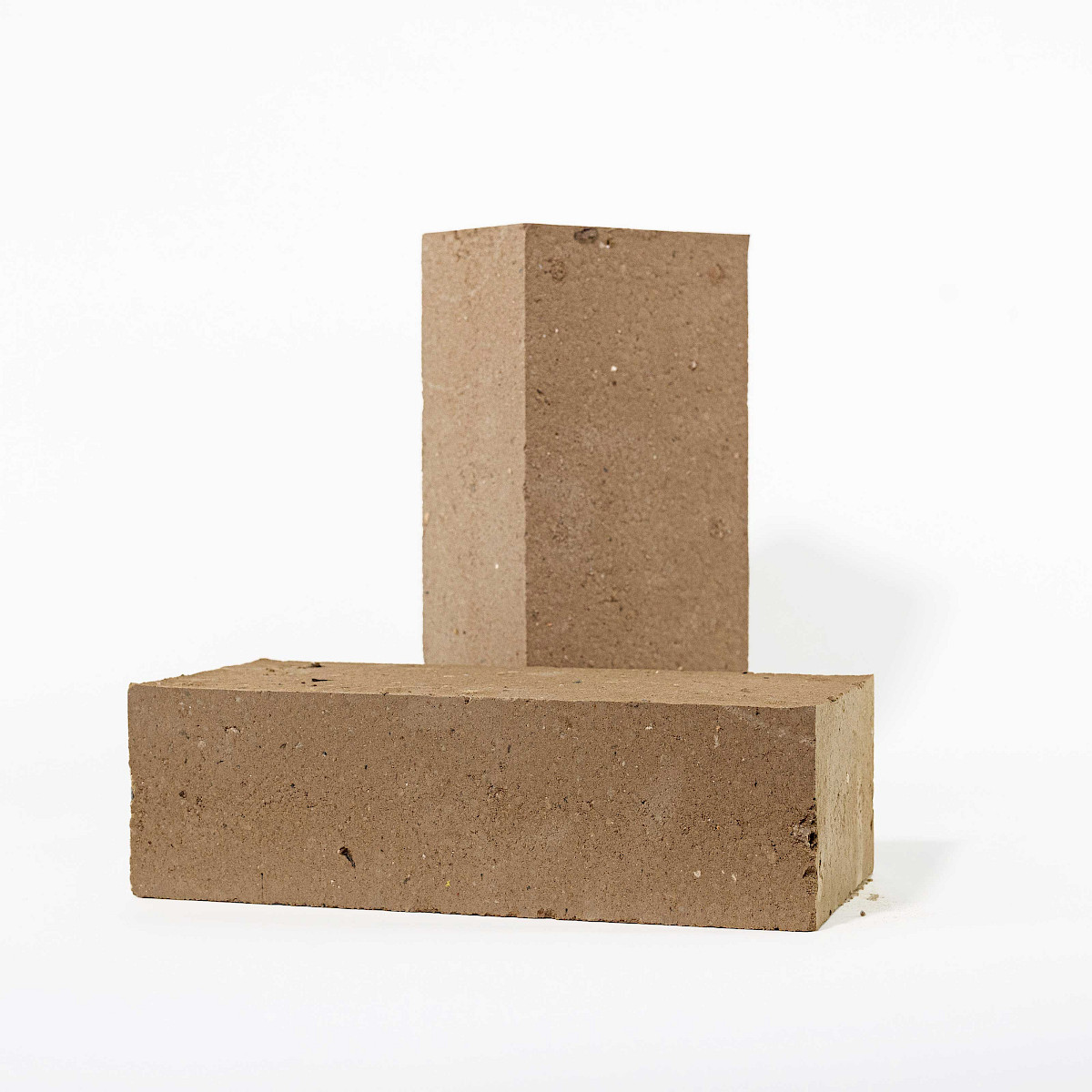
Earth Block (CEB) – load-bearing – DIN 18945 – p 3 – II – 2,0 – S (295 × 140 × 90)

Compressed earth blocks are our core product. Tested according to DIN 18945, they are suitable for load-bearing masonry construction up to building class 4.

Image

The blocks are unfired and unstabilized. Their high density ensures excellent moisture regulation, acoustic performance, and thermal mass to keep rooms cool during summer heat.

Available from Summer 2026
Product inquiries: contact@eb.eco
Image

Image

Product Sheet

Masonry Mortar

Masonry mortar – DIN 18946 – 0/4 m – M2,0 – 2,0

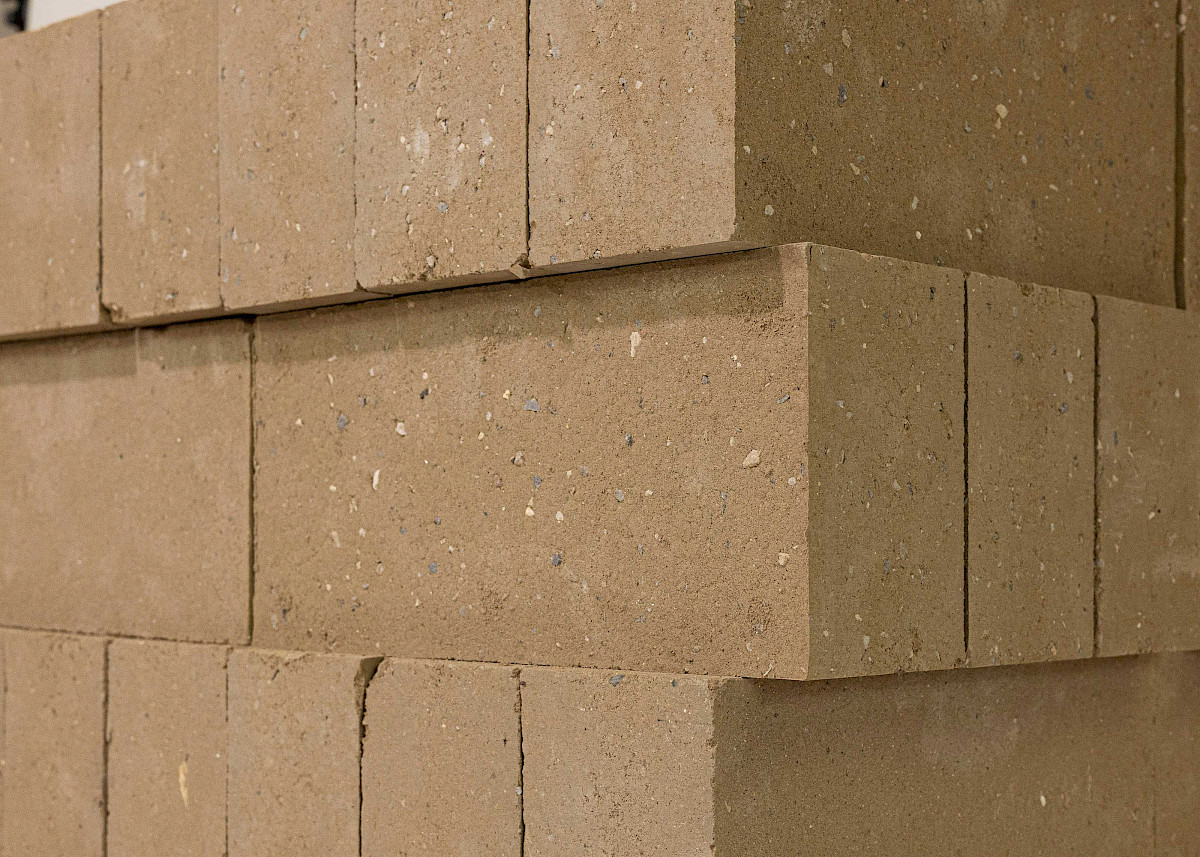
Our earthern masonry mortar made from regional excavation material is specifically matched to our earth blocks and suitable for both load-bearing and non-load-bearing masonry.

Image

The mortar is produced in our Berlin factory and delivered in big bags to construction sites. Final workability is adjusted on site by slaking and the addition of water.

Available from Summer 2026
Product inquiries: contact@eb.eco
Image

Product Sheet

Frequently Asked Questions

What is excavated soil?

Excavated soil refers to earth material that is removed during construction works; for example for foundations, basements, or infrastructure. It consists predominantly of naturally occurring subsoil and often includes loam, a mixture of gravel, sand, silt, and clay. Our quality controls make sure that the soil is 100% natural and free of toxic ingredients.

By mass, excavated soil is the largest waste stream in Germany. Every year, many millions of tonnes are dug out of the ground and, landfilled. This means that there is no scarcity for this material.

Instead of extracting new raw materials through open-pit mining, we use this material as the basis for high-performaning building products. In doing so, material cycles remain local, additional landscape destruction is avoided, and an existing materialwaste stream is upgraded into a valuable construction resource.

What’s the CO₂ footprint of you products?

Through our compression process, in which semi-dry earth is pressed into blocks, followed by air drying, our earth blocks generate only a fraction of the emissions of conventional masonry materials. Energy-intensive firing processes and the use of emission-intensive binders such as cement are completely avoided.

Our earth blocks emit 9.95 kg CO₂ equivalents per m³ in the product stage (Modules A1–A3 in accordance with EN 15804).

By comparison, conventional mineral masonry products – depending on raw materials, density, and manufacturing process – typically range between approximately 113 and 305 kg CO₂ equivalents per m³ (also referring to A1–A3). Accordingly, our earthen blocks demonstrate a significantly lower climate impact during the manufacturing phase.

The stated values are based on an internal life cycle assessment conducted in accordance with the methodology of EN 15804. They do not currently constitute a third-party verified Environmental Product Declaration (EPD). Following the establishment of continuous series production and stable process data, the preparation of a verified EPD is planned.

How are the earth blocks manufactured?

The excavated earth first undergoes material analysis. Grain distribution, plasticity, and clay content are determined, and any potential contamination are excluded.

This is followed by mechanical processing. The material is crushed and screened, precisely moistened, and intensively mixed until a homogeneous mass with a defined grain grading and optimal processing moisture content is achieved.

The material is then compressed in a hydraulic press under high pressure. Through controlled compaction, the blocks reach their specified dry density, dimensional accuracy, and structural strength.

Airdrying takes place over a period of approximately 14 days under controlled conditions; without firing and without additional thermal energy input. After drying, the blocks are quality-checked, palletized, and ready for delivery.

Are there any regulatory barriers?

No. Our products are manufactured in accordance with the applicable technical standards for earth construction. Our earth blocks are classified under DIN 18945 and can be used for load-bearing masonry in conjunction with DIN 18940. Our other products are likewise aligned with the relevant standards and technical guidelines.

All our product series undergo external testing before going to market. In addition, we ensure consistent material quality through continuous quality assurance measures within our production process. This includes regular testing of relevant performance parameters as well as an internal quality control protocol.

Our building materials can therefore be used within the framework of the applicable technical rules. However, as with any construction material, there may be specific requirements for design, structural calculation, and execution.

What can be constructed with your products?

In principle, our products can be used to realize all wall elements within a building; both load-bearing and non-load-bearing walls.

Earth masonry is particularly well suited for load-bearing internal walls in situations where high acoustic insulation is required. Due to its high mass, earth provides a excellent noise cancellation; both within a single building(e.g. between living and sleeping areas or between classrooms) and between separate structures, such as semi-detached houses.

External masonry walls are also possible, provided appropriate weather protection is ensured, for example through a ventilated façade or another protective building envelope. In such constructions, earth can serve as the primary structural system, transferring vertical and horizontal loads and contributing to the overall bracing of the building.

In addition, earth performs exceptionally well in hybrid construction systems. It can be combined with timber structures as a load-bearing solid element, integrated in mixed systems of timber frame and solid earth construction, or used as infill within timber frame assemblies. This allows the specific advantages of each material to be strategically combined.

Are the blocks water-resistant?

Earth blocks are not water-resistant in the sense of being waterproof materials. As unfired, capillary-active products, they react to direct and prolonged moisture exposure.

For standard use in building construction, however, this does not pose a problem provided that proper moisture protection by design is ensured. This includes, in particular, effective base detailing to prevent rising damp, reliable weather protection for external walls (e.g. through a ventilated façade or suitable plaster), and careful detailing to permanently protect the building element from rain and standing water.

To enhance surface protection, wall surfaces may be treated with suitable waxes or oils. It is important to maintain vapor permeability so that the moisture-regulating properties of the earth are not compromised.

During construction, earth elements should not be left permanently exposed to the weather. Direct rainfall or rising damp must be avoided. Temporary roofing or a reliable weather protection strategy is therefore required during construction.

How many blocks are required per square meter of masonry?

This depends on the specific application and the structural function of the wall.

Load-bearing masonry made from our blocks is typically constructed with a wall thickness of 295 mm (one block depth). This requires approximately 70 earth blocks per m².

If the masonry also contributes to the structural bracing of the building or needs to carry higher loads, a greater wall thickness may be required, for example 450 mm (1.5 blocks deep). In this case, around 105 blocks per m² are needed.

For non-load-bearing internal walls, the blocks can be laid in stretcher bond, resulting in a wall thickness of 140 mm. This configuration requires approximately 35 blocks per m².

The exact design is determined as part of the structural calculation in accordance with DIN 18940.

Can earth block masonry be painted or plastered?

Yes, earth block masonry can be painted, plastered, or otherwise surface-treated.

As a general principle, vapor permeability should be maintained. Clay paints and clay plasters are particularly suitable, as they preserve the capillary-active and moisture-regulating properties of the earth. This ensures that the benefits such asmoisture buffering and a balanced indoor climate, remain fully effective.

A light surface wash is also possible. By gently drawing a damp sponge over the surface, the joints can be visually softened, turning the masonry into a calmer, more continuous surface without altering its natural color.

In certain applications, it may be advisable to use more water-resistant finishes. Lime plasters or mineral tile finishes, for example, are well suited for bathrooms, kitchens, or other areas subject to higher moisture exposure. In such cases, careful detailing is required to prevent persistent moisture from entering the structure.

Other mineral coatings are generally compatible. Highly diffusion-resistant paints or dense coating systems are less suitable, as they may impair the moisture-regulating performance and recyclability of the material.

How can earth improve indoor air quality?

Earth naturally regulates humidity. Due to its capillary-active and vapor-permeable structure, it can absorb excess indoor moisture, store it temporarily, and release it again when needed. This buffers humidity highs and lows and helps maintain relative indoor humidity at a comfortable and stable level.

Balanced indoor humidity reduces the risk of mold, improves thermal comfort, and contributes to a healthy indoor environment. At the same time, our materials do not rely on synthetic binders or additives, meaning no petrochemical off-gassing is released into the indoor air.

Through this combination of moisture regulation and material health, earth materials make a measurable contribution to a stable and healthy indoor climate.

How long do the products last?

Earthen building materials are virtually indefinitely durable when properly designed and protected from persistent moisture exposure. They do not undergo chemical aging or material-related embrittlement. As long as the components are protected against permanent moisture ingress, no natural material fatigue occurs.

Surface wear resulting from regular use, such as mechanical impact or staining, can be easily repaired. With the addition of water, earth becomes plastic again and can be locally reworked. Drill holes and screw fixings can likewise be filled with the same material.

This inherent reversibility and repairability significantly contribute to a long service life and represent a key advantage of earth as a building material.